
The starter guides 01
How weight loss works: a simple illustrated guide
Learn how everyday meals, portions and movement affect weight, and why the scale changes from day to day.
In this guide
Start with what you eat and drink
Think of a normal day: breakfast, lunch, dinner, a snack and the milk in your coffee. All of these can add to the day’s calorie total. So can the oil you cook with and the sauce on your meal.
A calorie measures how much energy a food or drink provides. On an example label, “200 calories per serving” tells you how much energy is in that serving. Eating two servings gives you twice that amount. The FDA explains calories and serving sizes.
On many labels, calories are written as kcal, short for kilocalories. You may also see kJ, or kilojoules, another unit for the same energy. Your body uses energy while you walk to the shops, carry groceries, breathe and keep warm. It keeps using energy while you sit or sleep. The NHS explains food calories and everyday energy use.

How your body uses stored fat
Your body can keep some of the energy from food for later, including as body fat. If you regularly eat and drink more than your body uses, those stores can grow. If you regularly get less from food than your body uses, your body draws on its stores. The NHS explains this connection between eating and weight.
When the total you eat and drink stays below what your body uses, that difference is called a calorie deficit. The term describes a pattern over time, rather than one small lunch or one missed meal.
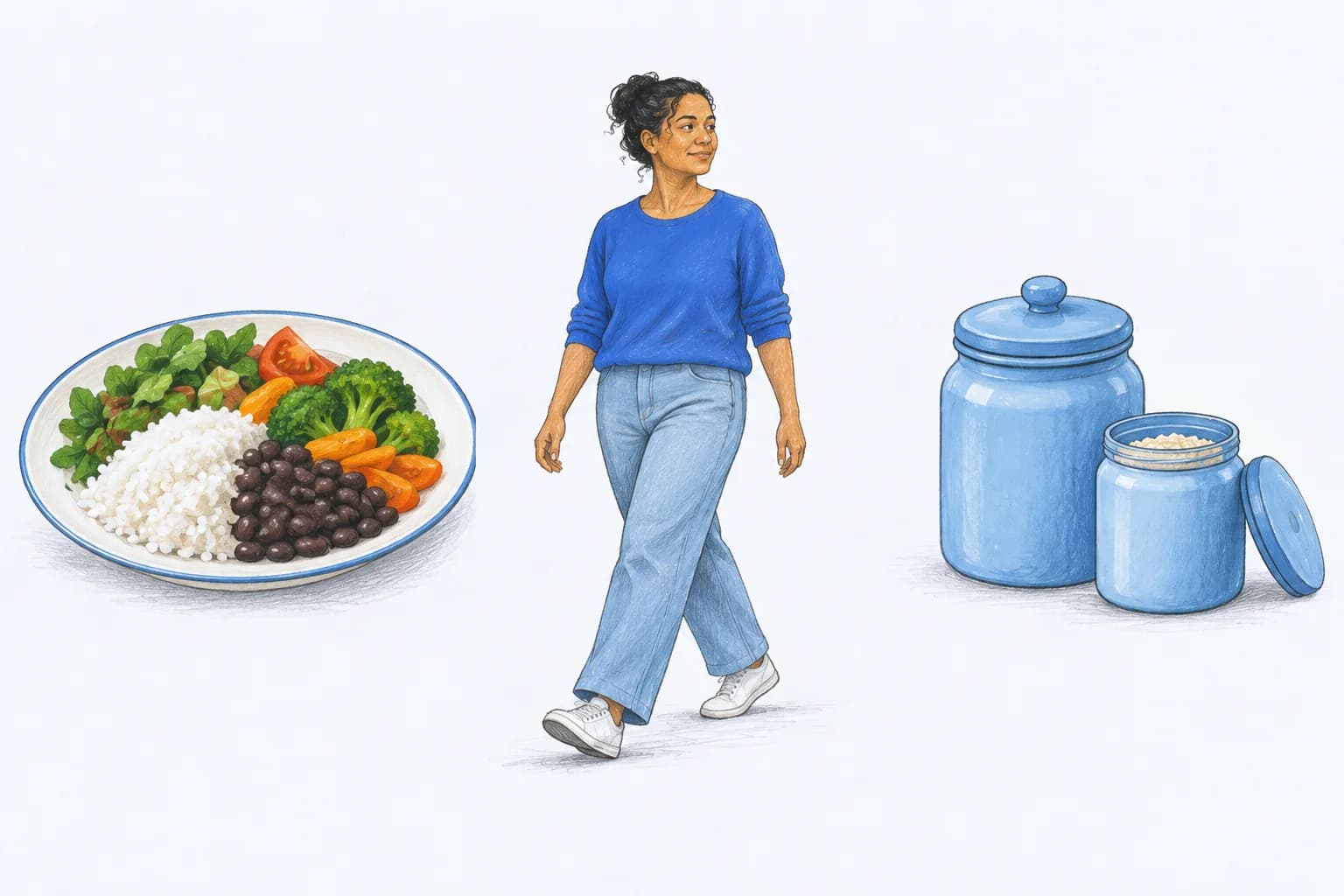
- Eat about as much as your body uses
- Stored energy can stay roughly the same.
- Regularly eat more than your body uses
- Your body can store more energy, including as fat.
- Regularly eat less than your body uses
- Your body draws on stored energy, including fat.
These describe what can happen over time. Tomorrow’s scale reading also includes water and food still being digested. NIDDK’s weight-change research accounts for these different parts of body weight.
Why your weight changes from day to day
Drink a glass of water or eat dinner and that water and food are now inside you. They have weight. Your scale includes them, along with your bones, muscles, body fat and the water already in your body.
Your body also holds different amounts of water from day to day. A higher reading alone cannot tell you that you gained fat, and a lower one cannot tell you that every bit lost was fat. Research on body-weight changes separates fat, water and other changes.
If weighing suits you, compare readings taken under similar conditions, such as the same time of day, and look at the pattern over several weeks. Keep your usual meals after one higher reading rather than cutting food in response to it.
Notice other parts of your day too: how a usual walk feels, your strength and whether meals leave you comfortably fed. Ask a health professional about unexpected weight changes or concerning symptoms.
Keep meals that fill you up
Start with meals you know. A bowl of rice with chicken or tofu and vegetables can still be lunch. You can look at the rice portion, the oil and the sauce while keeping a meal you enjoy. Bread, pasta or a favorite dessert can fit too; the amount and your overall eating pattern matter. NIDDK explains choosing portions.
Protein foods, such as beans, tofu, eggs, fish or yogurt, and fiber-rich foods, such as vegetables and whole grains, can help meals feel filling. Serve a snack in a bowl so you can see the portion. Measure cooking oil rather than guessing from a pour. The NHS gives practical meal and portion ideas.
Food also supplies nutrients your body needs. Protein helps maintain and repair tissues, including muscle. Carbohydrate and fat provide energy and do other jobs in the body. Trackers often call these three macros, short for macronutrients, and show them in grams. Vitamins, minerals and fiber matter too. MedlinePlus explains protein and other nutrients.
Keep regular, nourishing meals. If a plan leaves you constantly hungry, weak or preoccupied with food, ask a qualified health professional for help reviewing it.
Make room for movement and sleep
Walking to the shops, taking the stairs or doing a workout all use energy. Choose movement that fits your ability and your day. Walking and strength exercises can support health even when your weight barely changes. CDC explains these benefits of activity.
Sleep, stress, medicines and health conditions can affect weight management too. A late shift, caring for a child or a tight food budget can shape which habits you can keep. CDC includes sleep, stress and personal circumstances in its guidance.
Try something that fits your week, such as keeping an easy lunch at home or taking a short walk after work. You can adjust it as your day changes.
Start with one ordinary day
- Write down what you eat and drink on an ordinary day, including snacks, sauces and cooking oil.
- Notice portions and when meals leave you hungry or comfortably fed.
- Pick one change that fits, such as water with lunch or measuring the oil you use for dinner.
- Choose whether a diary, portion notes or calorie numbers help you. Counting is optional.
A short food record can help you see your usual portions. You can stop recording when it has served that purpose. NIDDK explains using a food diary. The next chapter shows how to record one meal, with portions and labels.
Common questions
Does a higher scale reading mean I gained fat?
A scale includes water and food still inside you, as well as body fat. One higher reading does not tell you which part changed. Compare the pattern over time.
Do I need to exercise before I can start?
You can start by understanding your meals and portions. Movement helps your health too, and it can begin with something familiar, such as a walk suited to your ability.
Do I have to count calories forever?
No. You might use a tracker briefly to learn about portions, or prefer a food diary with no numbers. If recording creates distress, stop and seek support.
Which app should I use?
First decide what you need: simple logging, detailed nutrients or food alongside workouts. Our calorie-tracker comparison explains those choices without pretending one tool suits everyone.
Sources & further reading
- Calorie countingNHS
- Healthy eating when trying to lose weightNHS
- Body Weight PlannerNIDDK
- Steps for Losing WeightCDC
- Physical Activity and Your Weight and HealthCDC
- Body-weight dynamics: research appendixHall and colleagues, NIDDK
- Food Portions: Choosing Just Enough for YouNIDDK
- Eating Disorders: What You Need to KnowNIMH
- Protein in dietMedlinePlus
- Nutrition definitionsMedlinePlus
- How to Understand and Use the Nutrition Facts LabelFDA